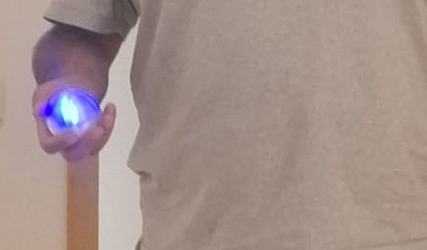
First prototype
The first prototype of SIMORGH is built!
Small robots working together to explore, sense and connect in places people and radio signals struggle to reach.
There are places we need to understand, but would rather not send people into.
After a collapse. Inside industrial infrastructure. Through confined, unstable or inaccessible spaces. Sometimes the difficulty is danger. Sometimes it is access. And sometimes, once you go far enough inside, the radio link becomes the limiting factor.
But we need to find out what is there, collect information, and bring that information back to someone who can act on it.
SIMORGH explores how small robots working together could extend that reach. A group could investigate different routes, carry sensing into more places, and help maintain a path for communication as it moves.
Search and rescue is an important motivation for this work. The underlying questions also matter in inspection and other environments that are difficult to reach. The long-term aim is a useful system that combines movement, sensing and communication, shaped by the places where people need it.

The interesting part of SIMORGH is what small robots could make possible together.
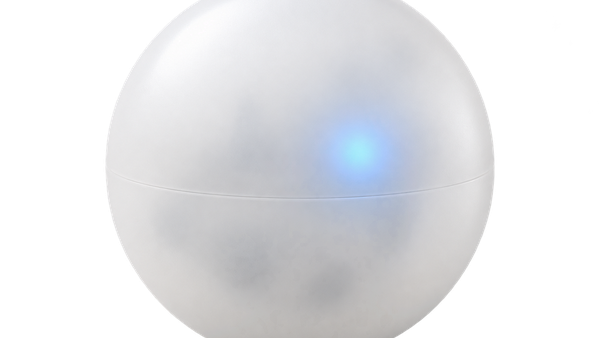
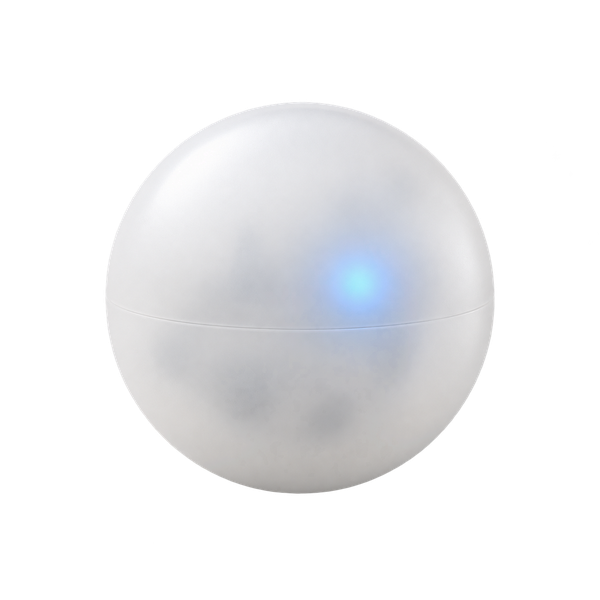
The physical concept is a white translucent sphere, about five centimetres in diameter, with a circuit board and other components enclosed inside. Each robot is one part of a larger system. Its size, construction and behaviour need to make sense at the scale of the group.
The research brings together three connected questions:
A swarm could explore several paths, share what it discovers, and adapt when an individual robot gets stuck or a route is blocked. Those possibilities have to be developed and tested together.
Communication is central to that idea. As the robots move, they form a network that carries information back through the group. That network could also support other robots, sensors or devices operating beyond the reach of a direct wireless link. SIMORGH is therefore an exploration system and a way of investigating communication infrastructure that can move.
There is a lot to learn before that ambition becomes a dependable tool: mechanics, power, sensing, radio propagation, coordination and behaviour in real environments. I want the development process to make both the progress and the remaining questions visible.
SIMORGH takes its name from Attar's Conference of the Birds. The birds searching for the Simorgh discover themselves in the answer: si morgh, thirty birds. That connection matters to me. The strength of this project belongs to the collective, and to what its members can achieve together.
SIMORGH is being built in the open: one prototype, experiment, failure and small victory at a time.
The build log follows the whole project: the little spheres and their electronics, movement and sensing, wireless links and mesh networks, collective behaviour, and the environments where all of this might become useful.
Some entries are technical. Others are about the choices behind the work and the reasons for building it. I want to show what an experiment actually tells us, what went wrong, and which questions remain open.
You are welcome to look over my shoulder, challenge an assumption, or bring a problem that changes what I try next.
The first prototype of SIMORGH is built!
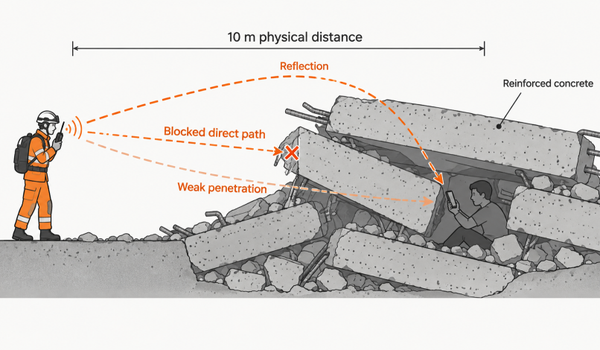
Some technical information on a major challenge.

There are many reasons to critizice current technological trends. But we cannot forget technology is our creation as a tool for a better world.
Hi, I'm Emil.
I'm a researcher and university professor working in communications, networks and intelligent systems at the University of Málaga.
SIMORGH grew out of two ideas that are closely connected: that many small robots can sometimes explore an environment better than one sophisticated machine, and that those same robots can form the communication network that allows machines deeper inside that environment to remain connected. That combination is at the centre of the project.
For now, SIMORGH is small too. I design, build, program and test much of it myself, with the project growing out of research carried out at the university.
You can find more about my work on my personal website or connect with me on LinkedIn.
If any of this overlaps with a problem you are working on (or if you are simply curious) feel free to get in touch.